

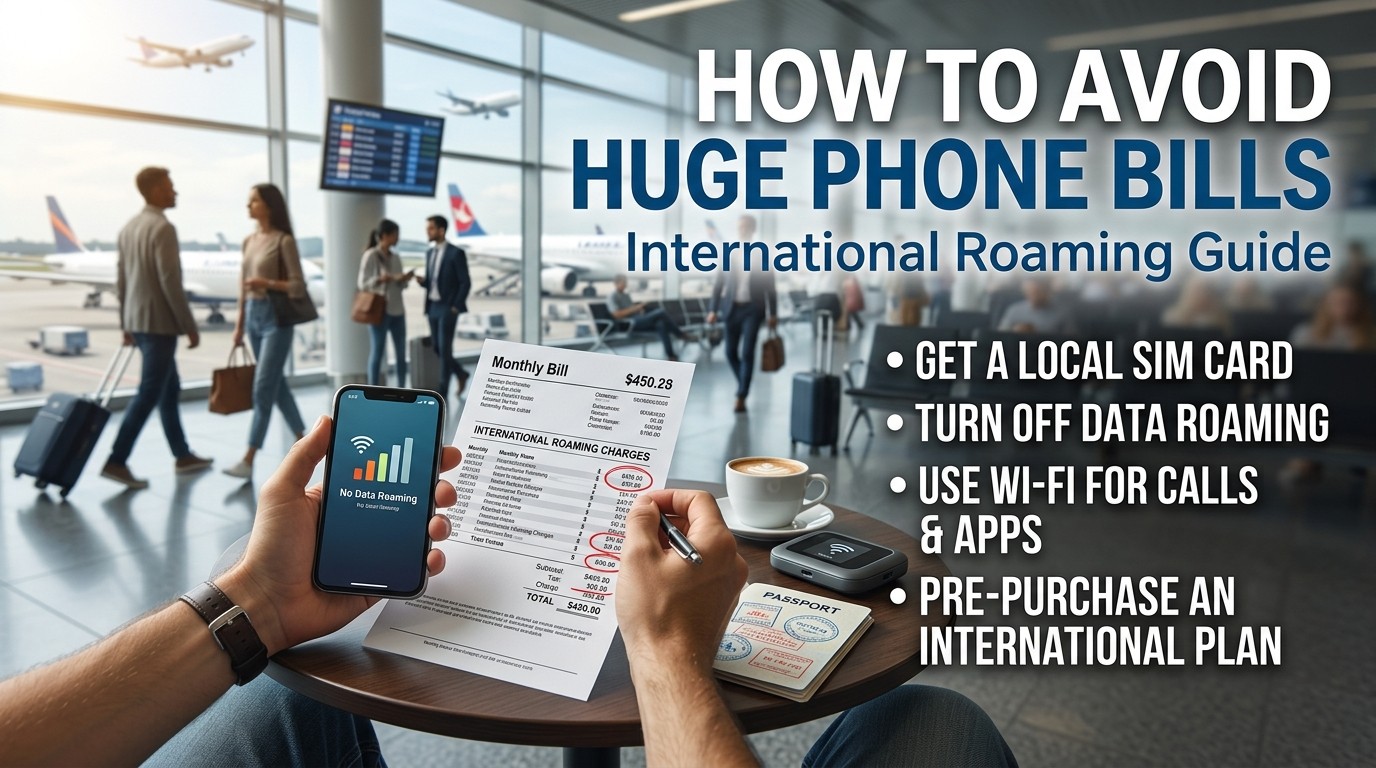
Avoid Huge Phone Bills starts with planning your roaming, choosing the right SIM option, reducing background data, and keeping communication tools simple before you leave.
Travel is exciting until the first surprise mobile bill lands in your inbox. One call, one map refresh, one streaming session, and suddenly the cost of staying connected can become stressful. That is why this guide focuses on how to Avoid Huge Phone Bills before, during, and after your trip. The good news is that international connectivity does not have to be expensive, confusing, or risky. With the right habits, you can stay reachable, use data wisely, and still keep control of your budget.
The biggest mistake travelers make is assuming their normal mobile plan will behave the same way abroad. It often does not. Roaming can be costly, background apps can drain data silently, and even a few minutes of casual use can turn into a large charge if you are not paying attention. To Avoid Huge Phone Bills, you need a simple system that covers settings, SIM options, device habits, and emergency backup plans.
This is not only a technical issue. It is also a psychological one. Travelers relax more when they know how they will communicate, what the cost limits are, and how to avoid accidental data usage. A clear plan reduces anxiety, supports better decisions, and lets you enjoy the trip instead of worrying about every notification. To Avoid Huge Phone Bills, think of your phone plan as part of your travel strategy, not an afterthought.
Why Phone Bills Become So Expensive Abroad
International roaming charges can become expensive because mobile networks often charge your home provider for using foreign networks. That cost may be passed on to you at a much higher rate than your normal domestic usage. If you are not careful, simple activities like opening email, checking a map, or receiving voicemail can create fees that add up quickly. To Avoid Huge Phone Bills, it helps to understand that roaming is not just about active use. Background activity matters too.
Many people are caught off guard because their phone keeps working normally after landing. That normal-looking experience hides a different pricing structure. Your phone may show bars, signal, and data icons, but those icons do not tell you what each action costs. The bill arrives later, after the trip feels over. Avoid Huge Phone Bills by treating connectivity as something that must be managed, not assumed.
Another reason the cost climbs is that apps behave aggressively in the background. Photo sync, cloud backups, updates, location refreshes, and auto-play video can all keep using data while you think you are doing nothing. That is why Avoid Huge Phone Bills is less about one trick and more about several layers of protection. If you control the device, the apps, and the network access, you control the bill.
The Smart Traveler’s Goal

A smart traveler does not try to eliminate every possible communication cost. That is unrealistic. The real goal is to stay connected at a predictable price. To Avoid Huge Phone Bills, you want enough access for maps, messages, booking changes, and emergencies without paying premium roaming rates for every action.
A predictable plan has three benefits. First, it gives you peace of mind. Second, it helps you budget with confidence. Third, it reduces decision fatigue when you are tired, busy, or moving through airports. The more clearly you define your communication setup before leaving, the easier it becomes to stay calm on the road. Avoid Huge Phone Bills by choosing predictability over improvisation.
The best approach also depends on your style of travel. A business traveler who needs daily connectivity has different needs from a leisure traveler who only wants occasional access. A family traveling with children may prioritize shared Wi-Fi and location tools, while a solo traveler may care most about maps and messaging. Whatever the case, Avoid Huge Phone Bills by matching the solution to the trip.
Compare Your Main Connection Options
| Option | Best For | Cost Control | Convenience | Notes |
|---|---|---|---|---|
| Roaming add-on | Short trips, familiar setup | Medium | High | Easy to activate, but check limits |
| Local SIM | Longer stays, heavy data use | High | Medium | Good value, but requires swap and compatible phone |
| eSIM | Frequent travelers, modern phones | High | High | Fast setup, no physical card needed |
| Public Wi-Fi | Light use, budget travel | High | Medium | Useful for backups, but not always secure |
| Portable hotspot | Groups or remote work | Medium | Medium | Helpful, but adds another device to manage |
This table is the foundation of a practical plan to Avoid Huge Phone Bills. There is no one perfect choice for everyone. The best connection method depends on your destination, your phone, your need for data, and how much effort you want to spend managing the setup.
Start Before You Leave Home
The easiest way to Avoid Huge Phone Bills is to prepare before departure. Do not wait until you land and start guessing. Check whether your carrier offers a travel pass, international bundle, or daily roaming rate. Compare that to a local SIM or eSIM option for your destination. The earlier you compare, the more control you have.
It also helps to review your current usage pattern. If you mostly use messaging, email, and maps, your needs are different from someone who uploads large files, joins video meetings, or streams content. Avoid Huge Phone Bills by planning based on your actual behavior, not your ideal behavior. Many travelers overestimate how little they will use their phone. The reality is usually more complicated.
Make a simple connectivity checklist before the trip. Confirm your plan, unlock your phone if needed, download offline maps, back up your contacts, and store important account numbers somewhere safe. Avoid Huge Phone Bills by treating connectivity as a pre-flight task, not a last-minute gamble.
Know What Your Carrier Really Charges
Carrier pricing can be complicated, which is exactly why travelers get surprised. Some plans charge per megabyte, some charge a daily fee, some include limited data, and some switch to a more expensive rate after a threshold. To Avoid Huge Phone Bills, read the international section of your plan carefully and look for the details that matter most: voice, text, data, and daily caps.
Check whether your carrier bills by country, region, or zone. A nearby destination may fall into a different pricing category than you expect. Also look at whether voicemail, hotspot use, or incoming texts trigger charges. Avoid Huge Phone Bills by learning the small print before the trip starts.
If your provider offers usage alerts, activate them. A warning at a small amount is much better than a shocking bill later. The purpose is not to fear your phone. The purpose is to use it deliberately. Avoid Huge Phone Bills by making the carrier rules visible before you need them.
Turn Your Phone Into a Controlled Device
Your phone can be your best travel tool or your most expensive surprise. The difference comes down to settings. Disable data roaming if you are not using a roaming plan. Turn off automatic app updates. Reduce background refresh. Limit cloud backups while on cellular data. These simple changes are one of the most reliable ways to Avoid Huge Phone Bills.
You should also review app permissions. Some apps use location data, sync media, or refresh content constantly. Those habits can quietly drain your data allowance. Avoid Huge Phone Bills by deciding which apps are allowed to work in the background and which ones should wait for Wi-Fi.
A few minutes of setup can save a lot of money. Put the most expensive habits under control before you leave. Then your phone becomes a tool you direct instead of a device that spends money in the background. That is a core principle if you want to Avoid Huge Phone Bills consistently.
Important settings to check
| Setting | What to do | Why it helps |
|---|---|---|
| Data roaming | Turn off unless needed | Prevents accidental roaming use |
| App updates | Set to Wi-Fi only | Avoids large silent downloads |
| Background refresh | Limit nonessential apps | Reduces hidden data use |
| Cloud sync | Pause heavy uploads | Keeps photos and files from draining data |
| Auto-play video | Turn off when possible | Saves data in social apps |
These settings are small, but they matter. To Avoid Huge Phone Bills, you need to reduce the invisible drains as much as the obvious ones. Most expensive surprises are not one giant action. They are dozens of tiny actions that went unnoticed.
Use Maps, Messages, and Media Wisely
Navigation is one of the most useful phone functions abroad, but it can also use data quickly if you are not prepared. Download offline maps before you travel. Save hotel locations, airport terminals, and major transit points. Avoid Huge Phone Bills by ensuring that the information you need is already on the device instead of being fetched in real time.
Messaging apps are usually more efficient than traditional calling, especially when used over Wi-Fi or a data plan with clear limits. Voice notes, text messages, and low-bandwidth chats help you stay connected without spending as much. Avoid Huge Phone Bills by choosing communication methods that suit the situation instead of using the most expensive option by default.
Media apps can be dangerous for your budget. Music, video, and cloud photo libraries often use more data than people expect. Download playlists and entertainment before you leave home. Avoid Huge Phone Bills by treating streaming as a deliberate choice, not an automatic one.
Roaming, Local SIM, or eSIM?
This is the decision most travelers struggle with. Roaming is easy because your existing number stays active, but it can be expensive. A local SIM often gives better value, but it requires phone compatibility and physical setup. An eSIM can offer a fast, modern solution with less hassle, especially if your device supports it. To Avoid Huge Phone Bills, choose the option that fits your trip length and data needs.
For short trips, a roaming add-on may be enough if the pricing is reasonable and the limits are clear. For longer trips, a local SIM or digital alternative often makes more financial sense. Avoid Huge Phone Bills by matching the option to the real usage pattern, not just the convenience factor.
Some travelers like to keep their home number active for calls and security codes while using a separate data line for travel. That hybrid approach can work very well when your phone supports dual connectivity. The important thing is to test the setup before you need it. Avoid Huge Phone Bills by planning the switch early, not in a rush at the airport.
Why eSIM Can Be a Strong Travel Choice

An eSIM is often attractive because it removes the need for a physical card swap. That makes setup faster and reduces the chance of losing a SIM tray or tiny card in transit. Best International eSIM Solutions are especially useful for travelers who move between countries, need quick activation, or prefer to manage their plan digitally. If your device supports it, an eSIM can be one of the easiest ways to Avoid Huge Phone Bills.
The advantage is not only convenience. It is control. You can often choose the exact data package, activate it at the right time, and keep your home line separate. That separation helps you understand what is being used and what is not. Avoid Huge Phone Bills by using that clarity to your advantage.
Of course, not every eSIM option is equal. Some packages are generous, while others look cheap but come with limitations. Read the data allowance, validity period, hotspot rules, and country coverage carefully. The goal is to find a reliable travel option that helps you Avoid Huge Phone Bills without adding new confusion.
Public Wi-Fi: Helpful, But Not a Full Strategy
Public Wi-Fi can reduce data use, but it should not be your only plan. Airport, hotel, cafe, and lounge networks can be slow, unstable, or unsafe. They are useful for backups, but not ideal for sensitive work or important logins. To Avoid Huge Phone Bills, use public Wi-Fi strategically, not blindly.
When you use Wi-Fi, be selective about what happens on it. Save downloads, backups, app updates, and large uploads for trusted connections. Avoid Huge Phone Bills by reserving cellular data for the things that need it most. That separation makes your usage more predictable and your bill more manageable.
If you must use a public network, be careful with banking, password changes, and private business data. A secure connection is more valuable than a free one. You are not only protecting money. You are protecting your information too. Avoid Huge Phone Bills and avoid unnecessary risk by thinking before you connect.
Business Travelers Need a Different Setup
If you travel for work, your phone is likely part of your income. That makes planning even more important. Avoid Huge Phone Bills by building a work-first communication strategy before you leave. Decide which apps must stay active, which tasks can wait for Wi-Fi, and which devices need mobile access at all times.
Business travel often involves calendars, email, messages, documents, and meetings. That can create a constant stream of data use unless you control it. Download schedules, turn off nonessential alerts, and set priority contacts. Avoid Huge Phone Bills by making sure your work tools stay useful without becoming expensive.
Travel Tech And Connectivity are closely tied for professionals because reliable access can make or break a workday abroad. The trick is not to carry every tool everywhere. The trick is to choose the right digital habits so your phone supports productivity without creating a shocking bill.
Families and Group Trips
Families need a slightly different approach because more devices usually means more possible data use. Children may stream videos, download games, or ask for maps and messages at once. Avoid Huge Phone Bills by setting clear rules before the trip begins. Decide who uses cellular data, who uses Wi-Fi, and when downloads are allowed.
Group travel also benefits from one communication lead. One person can manage reservations, updates, and local navigation, while others stay on a more limited setup. That does not mean everyone should be disconnected. It means the group should avoid redundant data use. Avoid Huge Phone Bills by preventing each device from doing the same work.
Shared calendars, offline maps, and preloaded entertainment can help reduce pressure. It is much easier to manage connectivity when everyone understands the plan. A little structure can save a lot of money and a lot of frustration.
Practical Habits That Save Money Every Day
The easiest travel habits are often the most powerful. Open Wi-Fi whenever available and trusted. Close apps you are not using. Turn off video autoplay. Keep cloud backups paused until you reach a safe connection. Avoid Huge Phone Bills by making these small habits automatic.
Also watch for app behavior that looks harmless. Social media apps refresh constantly. Ride apps may update location often. Video calls can eat data fast. Even email can use more than expected if attachments are involved. Avoid Huge Phone Bills by assuming that any app can become a data burden if left unchecked.
Another useful habit is to check your data usage daily. You do not need to obsess over every megabyte, but a quick review helps you catch unusual activity early. If usage jumps unexpectedly, you can adjust before the trip gets expensive. Avoid Huge Phone Bills by noticing problems while they are still small.
A simple daily routine
Morning: check your connection mode and confirm whether you are on roaming, Wi-Fi, or a travel plan.
Midday: review usage and close heavy background apps.
Evening: download what you need for the next day and charge everything.
This routine keeps you in control and helps you Avoid Huge Phone Bills without much effort.
Common Mistakes Travelers Make
One of the most common mistakes is leaving roaming on without a plan. Another is assuming the hotel Wi-Fi will solve everything. A third is forgetting that apps update in the background. To Avoid Huge Phone Bills, recognize that most problems come from assumptions, not from the phone itself.
People also forget to set alerts. Without warnings, it is too easy to keep using data until the total becomes painful. Set usage thresholds before departure. Avoid Huge Phone Bills by making the bill visible early.
Another mistake is treating travel connectivity like a one-time setup. In reality, conditions change. You may move to a new country, switch hotels, cross borders, or lose Wi-Fi access. That is why the smartest travelers check their setup regularly. Avoid Huge Phone Bills by staying flexible.
The Best Step-by-Step Plan

The simplest way to stay on track is to follow a clear sequence. First, review your plan and carrier options. Second, decide whether roaming, local SIM, or eSIM makes the most sense. Third, adjust your phone settings. Fourth, download offline essentials. Fifth, set alerts and usage reminders. This process helps you Avoid Huge Phone Bills before the trip even begins.
If you want a lean framework, use this rule: planning beats panic. A phone bill is easiest to control before it grows. Once the trip begins, the goal is not perfection. The goal is disciplined use. Avoid Huge Phone Bills by making smart decisions early and low-friction decisions every day after that.
This is also where Travel Documents Organizer habits help in a broader travel sense. The same discipline that keeps your passport, hotel details, and boarding info easy to find can also keep your digital life tidy. Organized travelers make fewer expensive mistakes because they know where everything lives.
Final Travel Mindset
A healthy travel mindset does not treat connectivity like a luxury or a threat. It treats it like a resource that needs structure. Avoid Huge Phone Bills by being deliberate, not paranoid. You do not need to disconnect from the world. You simply need a system that keeps spending under control.
That system becomes easier when you plan for the real trip you are taking, not the ideal trip in your head. Will you need navigation? Yes. Will you need messages? Probably. Will you need high-volume streaming? Maybe not. Avoid Huge Phone Bills by funding the useful parts of your journey and limiting the wasteful parts.
When you think this way, the phone stops being a source of fear. It becomes a useful travel tool with clear limits. That is the best outcome: connection without chaos, convenience without surprises, and mobility without a painful bill.
Conclusion
Avoid Huge Phone Bills by planning your connectivity before departure, controlling roaming and app behavior, and choosing the right SIM or eSIM for your route. A smart traveler checks carrier rules, downloads offline maps, sets usage alerts, and keeps background data under control. That way, your phone remains a helpful travel tool instead of a budget problem. The real goal is predictability: know what you will pay, know what you will use, and know how to stop accidental charges. With the right setup, you can stay reachable, manage work or family needs, and travel confidently without fear of a surprise bill.
Frequently Asked Questions (FAQ)
1. What is the fastest way to Avoid Huge Phone Bills while traveling?
The fastest way is to turn off roaming unless you have a clear plan, then use Wi-Fi, offline maps, and a travel SIM or eSIM when needed.
2. Is roaming always expensive?
Not always, but it can be if you use it without checking rates, caps, or country-specific rules. Read your carrier’s terms before you leave.
3. Are eSIMs better than roaming?
For many travelers, yes. They can be cheaper, easier to activate, and more flexible, especially on newer phones that support digital SIMs.
4. Should I keep my home SIM active abroad?
Sometimes yes, especially if you need calls or verification codes. Many travelers keep the home line for messages and use a travel data plan separately.
5. Does Wi-Fi completely solve the problem?
No. Wi-Fi helps reduce costs, but it is not always secure or available. A complete plan should include offline tools and a backup data option.
6. What phone settings help most?
The most useful settings are data roaming off, app updates on Wi-Fi only, background refresh limits, and paused cloud backups while on mobile data.
7. How do I check my data use abroad?
Use your phone’s built-in data tracker and your carrier’s app or alerts. Check daily so you can spot unusual activity early.
8. Do I need a local SIM for every trip?
No. Short trips may work fine with roaming or an eSIM. Longer trips and heavy data users often get better value from a local SIM.
9. What should business travelers do?
They should separate work-critical apps from everything else, set alerts, download files in advance, and test their roaming or travel plan before departure.
10. Can families really Avoid Huge Phone Bills together?
Yes. A shared plan, device rules, offline content, and one person handling navigation or reservations can reduce duplicated data use and keep costs under control.