
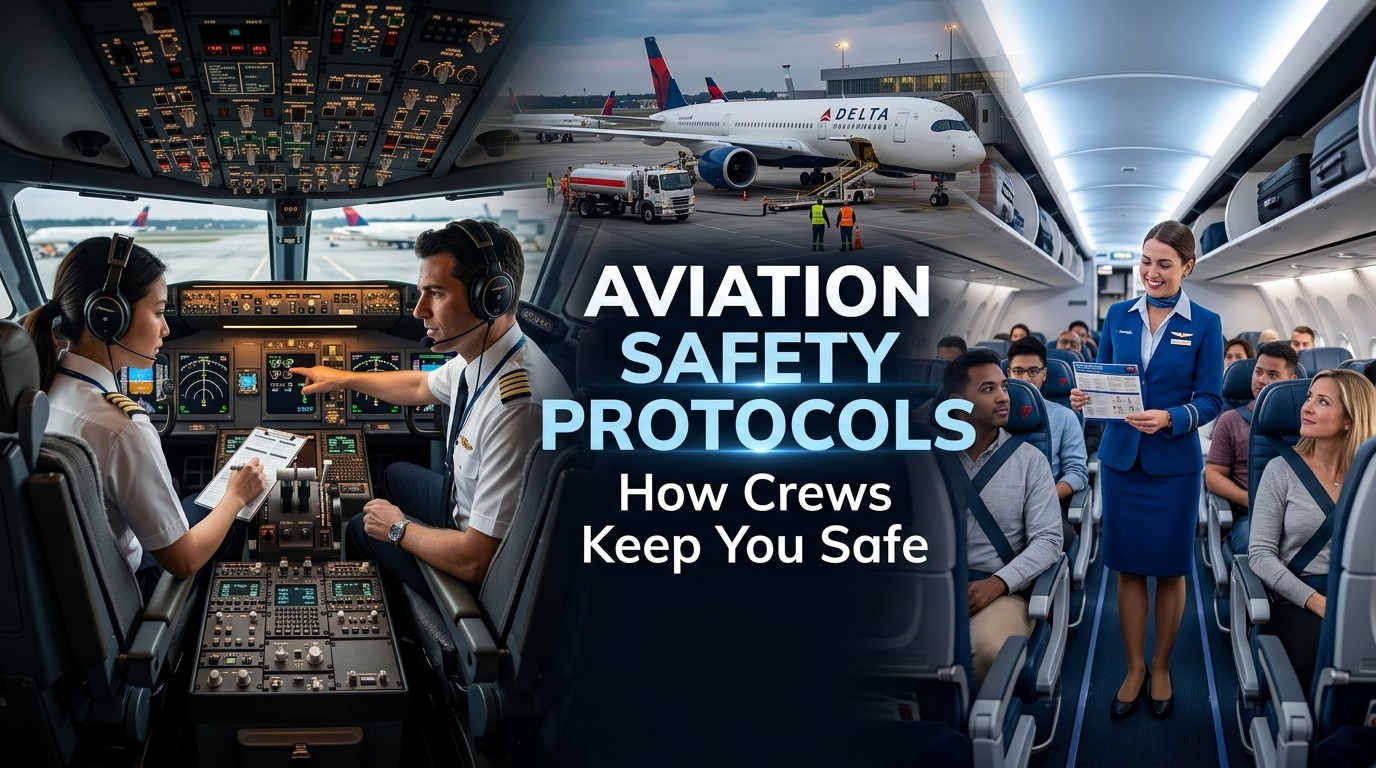
Aviation Safety Protocols keep flights safe by combining maintenance, training, communication, and passenger cooperation into one layered system that reduces risk before, during, and after every journey.
Flying feels routine because Aviation Safety Protocols are built into every stage of the operation. Most passengers only notice the seat belt sign, the announcement from the cabin crew, or the calm voice of the pilot. Behind that calm surface is a large chain of decisions, checks, and handoffs designed to keep the aircraft stable and the people onboard protected.
Understanding Aviation Safety Protocols helps travelers feel less anxious because it shows that safety is not a mystery or a slogan. It is a process. Dispatchers, engineers, pilots, cabin crew, and air traffic controllers each handle a different part of the system, and the aircraft stays safe because those parts work together in a disciplined way.
The goal of this guide is to explain how crews keep passengers safe without making the topic feel technical or intimidating. When people understand why procedures exist, they are more likely to trust the system, follow instructions, and stay calm during normal turbulence or unexpected changes. That trust is one of the quiet strengths of Aviation Safety Protocols.
How Safety Starts Before Boarding
Long before boarding begins, Aviation Safety Protocols are already shaping the flight. Dispatchers review route conditions, weather patterns, alternates, fuel requirements, and possible delays. Maintenance teams check the aircraft records and service status. Pilots review the plan, the operating environment, and any issues that could affect departure. Safety is not improvised; it is prepared.
Ground coordination matters because a flight depends on many moving parts. Fuel loading, baggage handling, de-icing, gate timing, and crew readiness all affect whether the aircraft leaves safely and on schedule. Aviation Safety Protocols keep those pieces aligned so that the flight begins with a clear operational picture instead of a series of avoidable surprises.
Boarding itself is part of the safety chain. Crew members need time to complete cabin checks, secure equipment, and confirm that exits and aisles are ready. Aviation Safety Protocols work best when the cabin is prepared carefully, because a calm start reduces the chance of confusion once the aircraft moves.
The Flight Deck and Decision Discipline
The flight deck is the decision center of the aircraft, and Aviation Safety Protocols depend heavily on disciplined cockpit work. Pilots do not simply fly from one point to another; they continuously evaluate weather, performance, traffic, fuel, and system status. That constant monitoring helps them respond early rather than waiting until a problem grows.
Cockpit teamwork is essential because two trained pilots can cross-check one another and reduce the chance of oversight. Aviation Safety Protocols are strengthened when each crewmember confirms data, challenges uncertainty, and verifies changes aloud. This is why aviation places such a strong emphasis on standardized callouts and precise communication in the cockpit.
Passengers often imagine the cockpit as a place of constant action, but much of the work is calm, repetitive, and procedural. That repetition is a strength. Aviation Safety Protocols rely on habits that have been tested, refined, and repeated until they become dependable under pressure. The less room there is for guesswork, the safer the flight becomes.
Communication and Crew Coordination
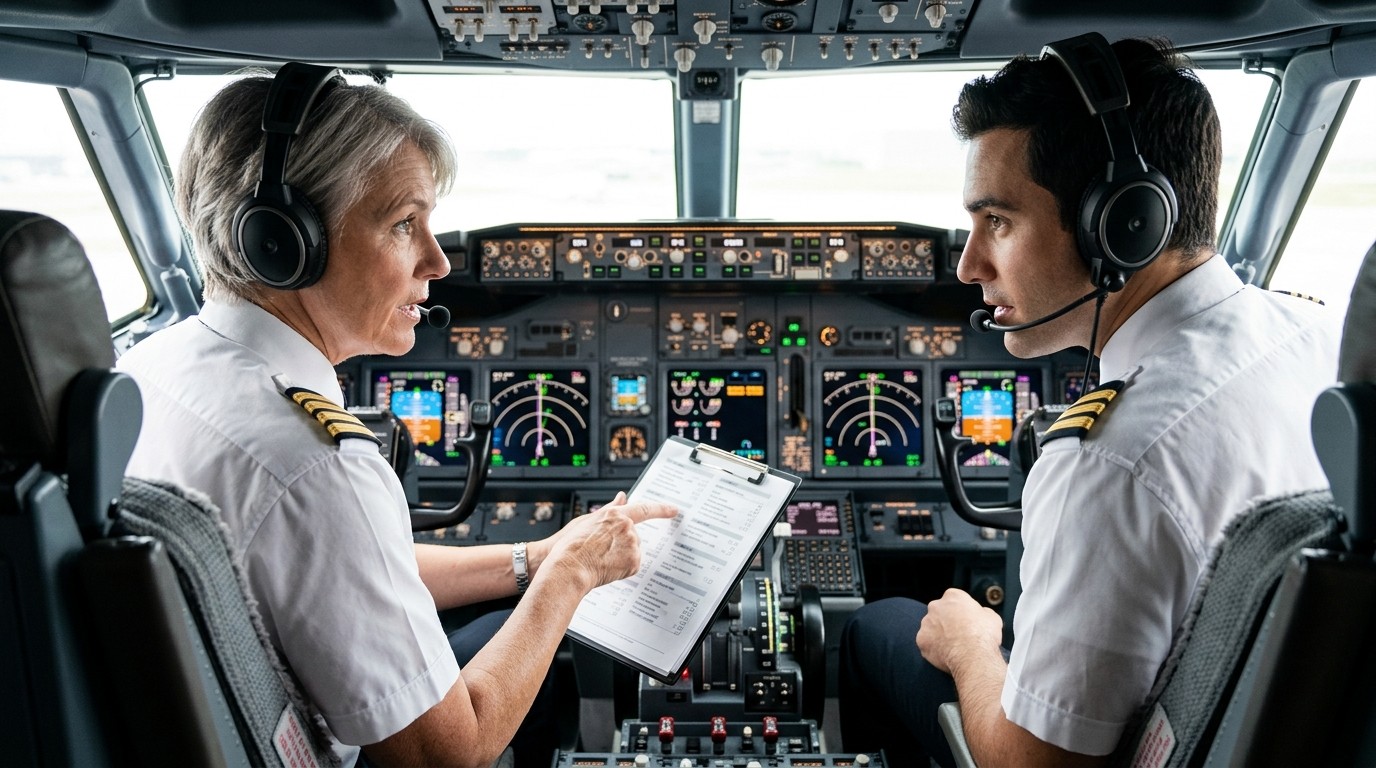
Good communication is one of the most important elements in safe flight operations. Aviation Safety Protocols are built around short, clear, and verified exchanges that reduce ambiguity. A misunderstood instruction or a missed alert can create unnecessary risk, so crew communication is designed to be direct and easy to confirm.
Within the cockpit and between cockpit and cabin, communication must stay efficient even when the environment is noisy or busy. Aviation Safety Protocols work because they prioritize clarity over speed alone. When a crew member states a concern, the other crew member listens, verifies, and responds. That mutual awareness prevents small errors from becoming major problems.
Passengers rarely see this coordination, but they benefit from it every minute of the flight. The atmosphere may feel quiet and smooth, yet that calm usually reflects active collaboration behind the scenes. Aviation Safety Protocols are effective because they make reliable communication a habit, not a hopeful idea.
Crew Resource Management in Practice
Crew Resource Management is the human side of teamwork. It is about making sure every crewmember can speak up, share observations, and help prevent mistakes. Aviation Safety Protocols are stronger when they are supported by that culture because safety improves when everyone has a voice.
A good team does not depend on rank alone. It depends on shared situational awareness. Aviation Safety Protocols are supported when a junior crew member can point out a concern, when a pilot can question an assumption, and when the team treats feedback as a safety tool rather than a challenge to authority.
This is where Flight Crew CRM Protocol matters. Flight Crew CRM Protocol helps organize communication, distribute workload, and reduce the chance that pressure or hierarchy blocks a useful warning. When crews use that model well, they reinforce Aviation Safety Protocols through cooperation instead of relying on any single person to notice everything.
What Cabin Crew Actually Do
Cabin crew play a much bigger role than most passengers realize. They are responsible for passenger safety, not only service. Aviation Safety Protocols depend on cabin crew to monitor the cabin, enforce procedures, respond to events, and prepare people for both normal and unusual situations.
Before departure, cabin crew complete checks that confirm the cabin is secure, exits are clear, equipment is in place, and passengers are ready for flight. Those checks are easy to overlook, but they are one of the visible signs that Aviation Safety Protocols are being applied consistently.
During flight, cabin crew also watch for signs of medical distress, unsafe behavior, unsecured items, and changing cabin conditions. Their work is often calm and invisible until a situation needs attention. That is the point: Aviation Safety Protocols are designed so that problems are noticed early, often before passengers even realize something has changed.
Why Safety Briefings Still Matter
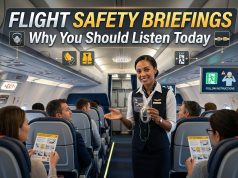
Many frequent flyers stop listening to announcements because they sound familiar, but they still matter. Aviation Safety Protocols are reinforced by briefings that remind passengers about exits, belts, oxygen masks, and evacuation behavior. Even if the information feels repetitive, repetition is part of how memory forms under stress.
The reason safety briefings remain important is that aircraft layouts differ. Exit placement, door design, seat configuration, and onboard equipment can vary from one plane to another. Aviation Safety Protocols help passengers orient themselves quickly so they do not need to search for basic information in a moment of confusion.
That is why Flight Safety Briefings should never be treated as background noise. Flight Safety Briefings are a short, practical rehearsal for a rare event. When passengers pay attention, they give themselves a better chance to react well if they ever need to. That simple attention supports Aviation Safety Protocols in a very real way.
Maintenance and Inspection Culture
Aircraft safety depends on what passengers never see. Engineers and maintenance teams inspect systems, repair issues, document service history, and verify that the aircraft meets strict standards before it flies. Aviation Safety Protocols depend on this invisible work because the flight would not begin without it.
Routine inspection catches wear before it turns into a hazard. Unsurprising as that may sound, it is one of the strongest reasons aviation is so reliable. Aviation Safety Protocols work because the system assumes that parts need continuous review, not blind trust. Every inspection adds another layer of confidence.
Maintenance also creates accountability. When an issue is logged, tracked, and corrected, the airline learns from it and the aircraft becomes safer for the next flight. That continuous improvement loop is a central part of Aviation Safety Protocols, even if passengers never notice the details of the repair process.
Turbulence, Weather, and In-Flight Stability
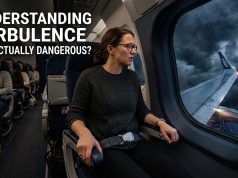
Turbulence is uncomfortable, but it is usually managed through preparation and calm response. Aviation Safety Protocols include procedures for changing altitude, adjusting route, and keeping passengers seated and secured when air conditions are rough. The goal is to protect comfort and safety, not to make turbulence disappear completely.
Weather is another major factor. Thunderstorms, icing, wind shear, and low visibility can all affect the flight path. Aviation Safety Protocols depend on weather awareness because pilots and dispatchers need to make good decisions before the problem reaches the aircraft. Planning around conditions is much safer than reacting too late.
The passenger role is simple: stay seated when asked, keep your seat belt fastened, and secure loose items. These actions do not feel dramatic, but they matter. In turbulence, the cabin is safest when everyone follows the same disciplined routine that Aviation Safety Protocols are built to support.
Emergency Readiness
Nobody boards a plane expecting an emergency, yet prepared crews train for one repeatedly. Evacuation procedures, smoke response, medical events, and irregular operations are all practiced so that the team can act quickly if needed. Aviation Safety Protocols are strongest when training turns panic into muscle memory.
Emergency readiness works because real emergencies can compress time and thinking. People freeze, misunderstand instructions, or forget what they know. Training counters that problem. Aviation Safety Protocols rely on rehearsal so that when the unexpected happens, the crew already has a practiced path forward instead of having to invent one under pressure.
Passengers also contribute to emergency readiness. Listening to the briefing, noticing exits, and following commands quickly all improve the outcome if something goes wrong. That cooperation is why Aviation Safety Protocols are more than a technical framework; they are a shared safety culture between crew and passengers.
Medical Events and Onboard Response
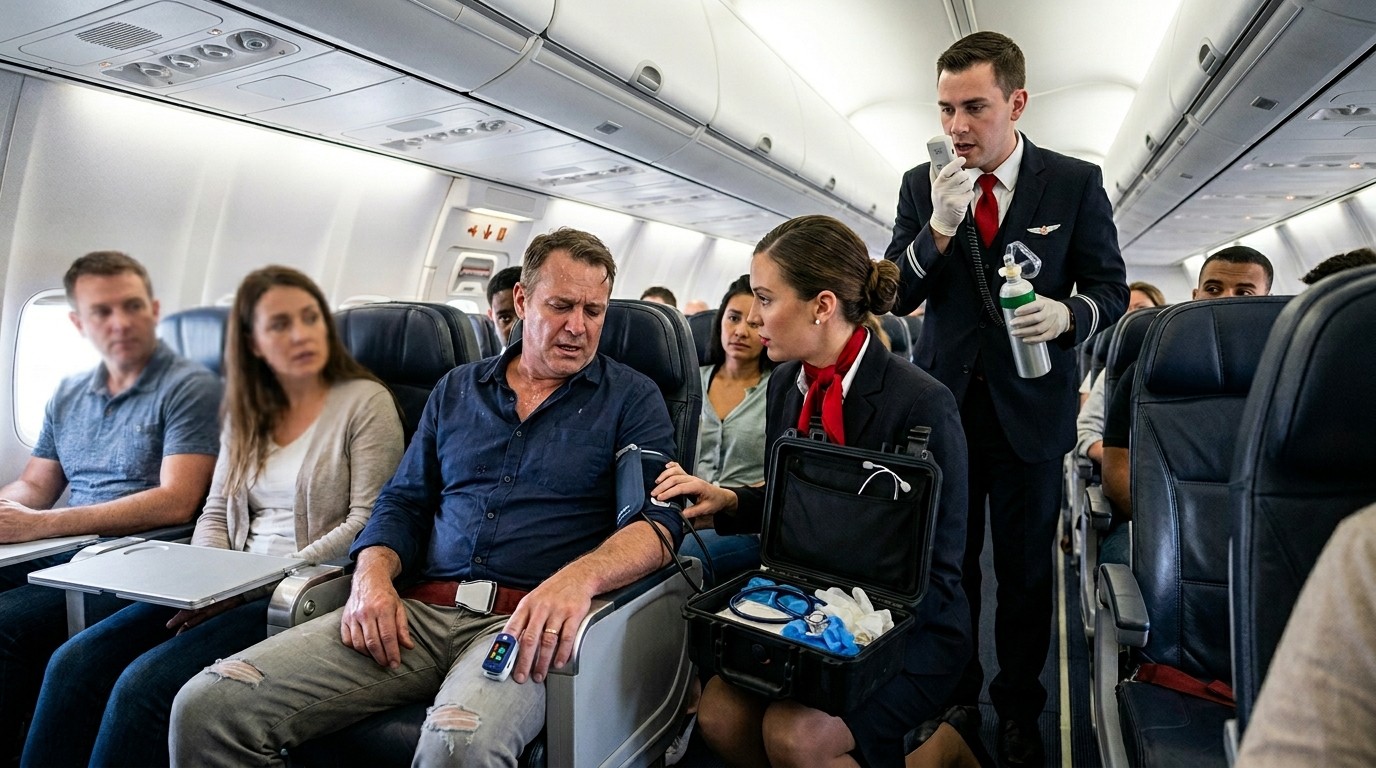
A flight can include medical issues ranging from motion sickness to fainting, allergic reactions, or more serious problems. Crew members are trained to assess the situation, coordinate with other staff, and use onboard resources when necessary. Aviation Safety Protocols include this response capability because safety is not only about the aircraft.
If a passenger feels unwell, speaking up early helps the crew respond sooner. A delay in reporting can make a manageable issue harder to handle. Aviation Safety Protocols work best when passengers and crew communicate quickly and clearly about anything that feels wrong, even if it seems small at first.
This is also where modern travel planning can intersect with onboard safety. Travelers on active trips may rely on Adventure Travel Insurance, which can help financially if a medical issue or evacuation affects the journey. When insurance is paired with Aviation Safety Protocols, the traveler has both operational and financial protection.
Passenger Behavior and Shared Safety
Passengers often think safety is something they receive passively, but their own behavior matters a great deal. Keeping aisles clear, storing bags properly, and listening during announcements all help the crew maintain order. Aviation Safety Protocols are more effective when passengers cooperate instead of adding avoidable friction.
A calm cabin is easier to manage than a chaotic one. That is why compliance matters so much during boarding, taxi, takeoff, and landing. Aviation Safety Protocols are not just rules for rules’ sake; they are designed to keep the environment predictable when timing and attention are both important.
Good behavior also includes being aware of your own needs. Hydrate, rest when possible, and tell the crew if something seems off. These small actions help the crew focus on genuine issues. In that way, passengers participate in Aviation Safety Protocols simply by making the flight easier to manage for everyone.
Disruptions, Delays, and Operational Flexibility
Not every safety event is dramatic. Sometimes the challenge is a delay, diversion, gate change, or weather hold. These moments can feel inconvenient, but they often show that the system is working. Aviation Safety Protocols include procedures for handling irregular operations without losing control of the situation.
A diversion may look frustrating to passengers, but from a safety perspective it is often the smarter choice. If weather, fuel, or airport conditions change, a crew may select a different option rather than forcing the original plan. That flexibility is part of Aviation Safety Protocols because safety always takes priority over convenience.
The best passenger response to disruption is patience and attention. Check new instructions, keep documents accessible, and stay calm while the crew manages the change. People often remember the inconvenience, but the real story is that Aviation Safety Protocols are designed to make sure inconvenience does not become danger.
Technology and Monitoring Systems
Modern aircraft are supported by advanced technology that improves precision and awareness. Weather radar, flight management systems, alerting systems, and automation all help crews maintain a safe margin. Aviation Safety Protocols use these tools to reduce workload and catch issues early.
Technology does not replace human judgment. Pilots still monitor conditions, confirm system behavior, and make decisions when the situation changes. That partnership between human and machine is a major part of Aviation Safety Protocols. The technology handles one set of tasks while the crew handles interpretation and action.
Passengers may never see most of these systems, but they benefit from them on every flight. Better monitoring, smoother routing, and more accurate data all support safer operations. In that sense, Aviation Safety Protocols are partly invisible because so much of the protection happens behind the scenes.
Culture, Training, and Accountability
The strongest safety systems are also the most honest. Crews need a culture where people can report concerns, learn from mistakes, and improve procedures without fear of being ignored. Aviation Safety Protocols depend on that kind of accountability because no system improves if it hides its weak points.
Training is not only about memorizing steps. It is about building judgment. Crew members practice emergencies, communication, cockpit coordination, and cabin procedures until they become repeatable. That repetition makes Aviation Safety Protocols dependable because trained behavior is more stable under pressure than instinct alone.
Accountability also means continuous review. If a process fails or nearly fails, the organization learns from it and adjusts. That is how aviation gets safer over time. Aviation Safety Protocols are not static rules; they are part of a living safety culture that improves through evidence and reflection.
How Passengers Can Support Safety
Passengers are not expected to manage the aircraft, but they can still support a safe environment. Listening to announcements, following crew directions, securing items, and keeping seat belts fastened are all simple habits that help. Aviation Safety Protocols work best when the cabin is cooperative.
Another useful habit is noticing your own condition. If you are tired, dehydrated, anxious, or unwell, you should manage it early instead of waiting. Early action helps the crew help you. That is an easy way to align your personal choices with Aviation Safety Protocols.
Travelers who understand the system tend to relax more easily. They know that flight safety is not random, and they know that the crew is following a disciplined process. That understanding creates trust, and trust is one of the psychological benefits of learning about Aviation Safety Protocols.
Practical Lessons for Travelers
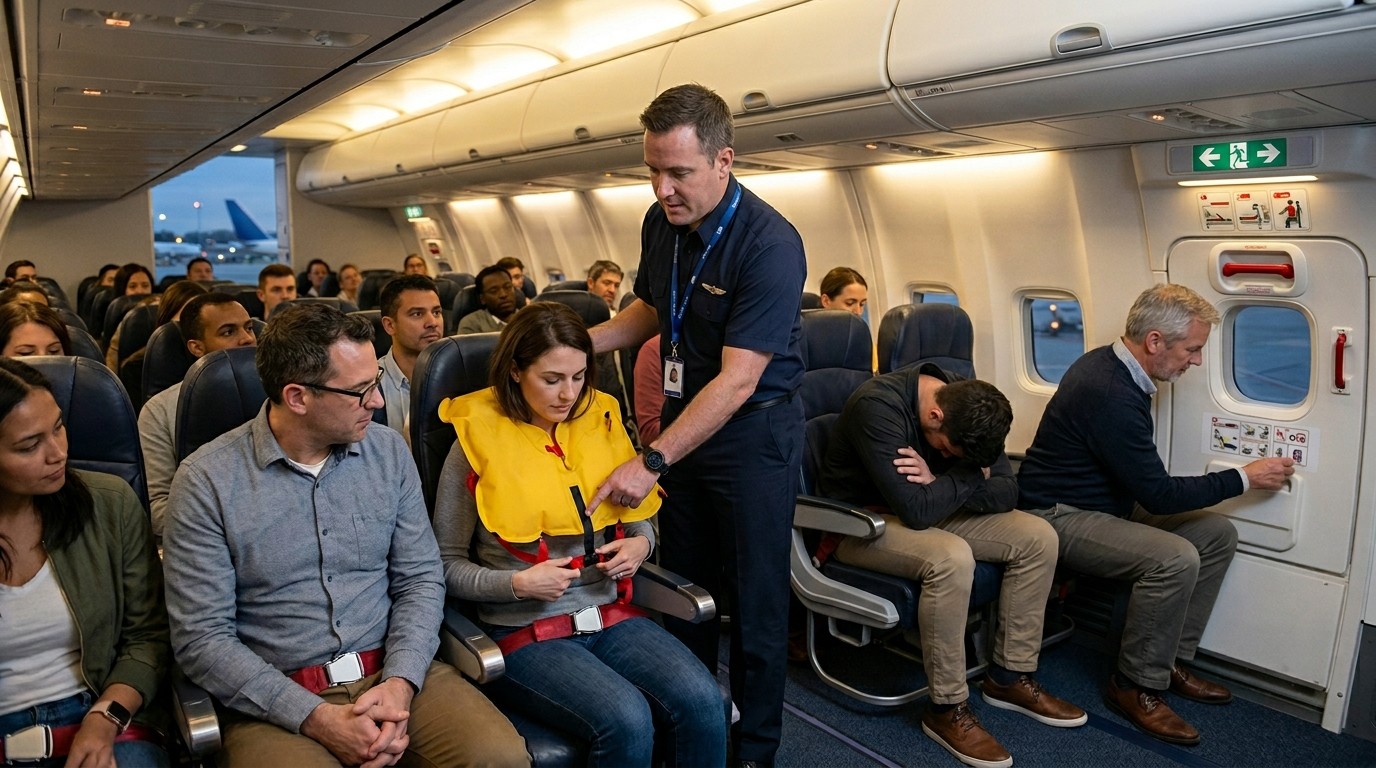
One of the most useful lessons is that safety is built before the emergency, not during it. By the time a rare event occurs, the important work has already been done through training, maintenance, planning, and communication. Aviation Safety Protocols are valuable because they prepare the flight long before anything goes wrong.
Another lesson is that simple actions matter. A fastened belt, a cleared aisle, a listened-to briefing, and a correctly stored bag may seem minor, but those behaviors reduce risk. Aviation Safety Protocols are effective partly because they turn ordinary habits into protection.
The final lesson is that passengers should trust the system without becoming careless. Confidence is healthy. Overconfidence is not. When travelers understand the balance, they can enjoy the flight more comfortably while still respecting the structure that keeps the trip safe. That is the real promise of Aviation Safety Protocols.
A Simple Passenger Habit Set
A traveler does not need technical expertise to benefit from safety systems. The most useful habits are easy to remember: listen once, look around once, ask questions early, and keep essential items within reach. When those habits become automatic, the cabin feels less confusing and the trip becomes easier to manage from departure to arrival.
Conclusion
Air travel is safe because it is built on structure, repetition, and teamwork. Crews do not rely on one lucky decision or one perfect person. They use checks, communication, maintenance, training, and shared responsibility to reduce risk at every stage of the journey. That is why Aviation Safety Protocols matter so much: they turn a complex operation into a predictable and resilient system. When travelers understand that system, they can feel calmer, follow instructions more confidently, and appreciate the quiet discipline that protects them from departure to landing. Safety in aviation is not accidental; it is practiced.
Frequently Asked Questions (FAQ)
1. What are the main aviation safety rules?
They are the procedures, checks, and training practices used to keep passengers and crew safe throughout a flight.
2. Why are safety briefings important?
They prepare passengers for emergencies and help them understand exits, belts, oxygen masks, and crew instructions.
3. What does CRM mean in aviation?
It is a teamwork approach that helps crew members communicate clearly, share awareness, and prevent mistakes.
4. How do crews handle turbulence?
They may adjust route or altitude, and they keep passengers seated and secured until conditions improve.
5. Why is maintenance so important?
It ensures the aircraft remains airworthy by catching wear, faults, and service issues before departure.
6. What should passengers do during a flight?
Listen to the crew, keep aisles clear, store bags properly, and stay belted when seated.
7. What happens if someone gets sick onboard?
Crew members assess the issue, provide help, and coordinate with medical support if needed.
8. How does technology improve safety?
It helps crews monitor weather, systems, and flight conditions while reducing workload and catching issues early.
9. Why do diversions happen?
They usually happen when weather, fuel, airport conditions, or operational issues make another option safer.
10. What is the simplest way to support safety as a passenger?
Pay attention, follow instructions, and treat the briefing as a real safety tool rather than background noise.