


This Lost Luggage Guide helps you act fast, stay calm, and protect your trip when a bag goes missing at the airport, on a connection, or after arrival.
A missing suitcase can ruin the mood of an entire trip in minutes. The good news is that most cases are manageable when you respond in the right order. A strong Lost Luggage Guide is not about panic. It is about moving step by step, collecting proof, and giving the airline the details it needs to find your bag quickly.
Travel is stressful enough without having to guess what to do next. The first few minutes matter because they shape the whole claim. This Lost Luggage Guide explains how to confirm the bag is truly missing, how to file the report, how to protect your spending, and how to avoid common mistakes that slow recovery. It also shows how smart packing and simple habits can reduce the chance of this happening again.
The emotional part matters too. People often forget details when they feel tired, embarrassed, or angry. A calm traveler usually gets better results than a rushed one. That is why this Lost Luggage Guide focuses on both the process and the mindset. You need clear facts, good documents, and a practical plan.
Why luggage goes missing
Air travel involves many handoffs, and every handoff adds a small risk. Bags move through check-in, screening, conveyor systems, loading crews, connection points, and delivery belts. A missed scan, a late connection, or a tag issue can send a suitcase in the wrong direction. A smart Lost Luggage Guide starts by understanding that baggage mistakes are usually operational, not personal.
Short connection times are one of the biggest causes of delay. If the flight lands late or the transfer window is tight, your bag may not make the next plane even if you do. A realistic Lost Luggage Guide accepts that this happens and prepares for it before the trip begins.
Label problems also create confusion. A tag can peel off, a barcode can be hidden, or two bags can look almost identical on the carousel. If your suitcase is plain black, it may be harder to spot in a crowded arrival area. That is why a practical Lost Luggage Guide recommends making the bag easier to identify than the one beside it.
Weather, airport congestion, and baggage system outages matter too. A bag can be delayed even when the flight itself seems normal. A thoughtful Lost Luggage Guide does not assume the worst, but it does assume that airport systems can fail. That mindset keeps you ready to act without wasting time.
The first 30 minutes after you notice the bag is missing
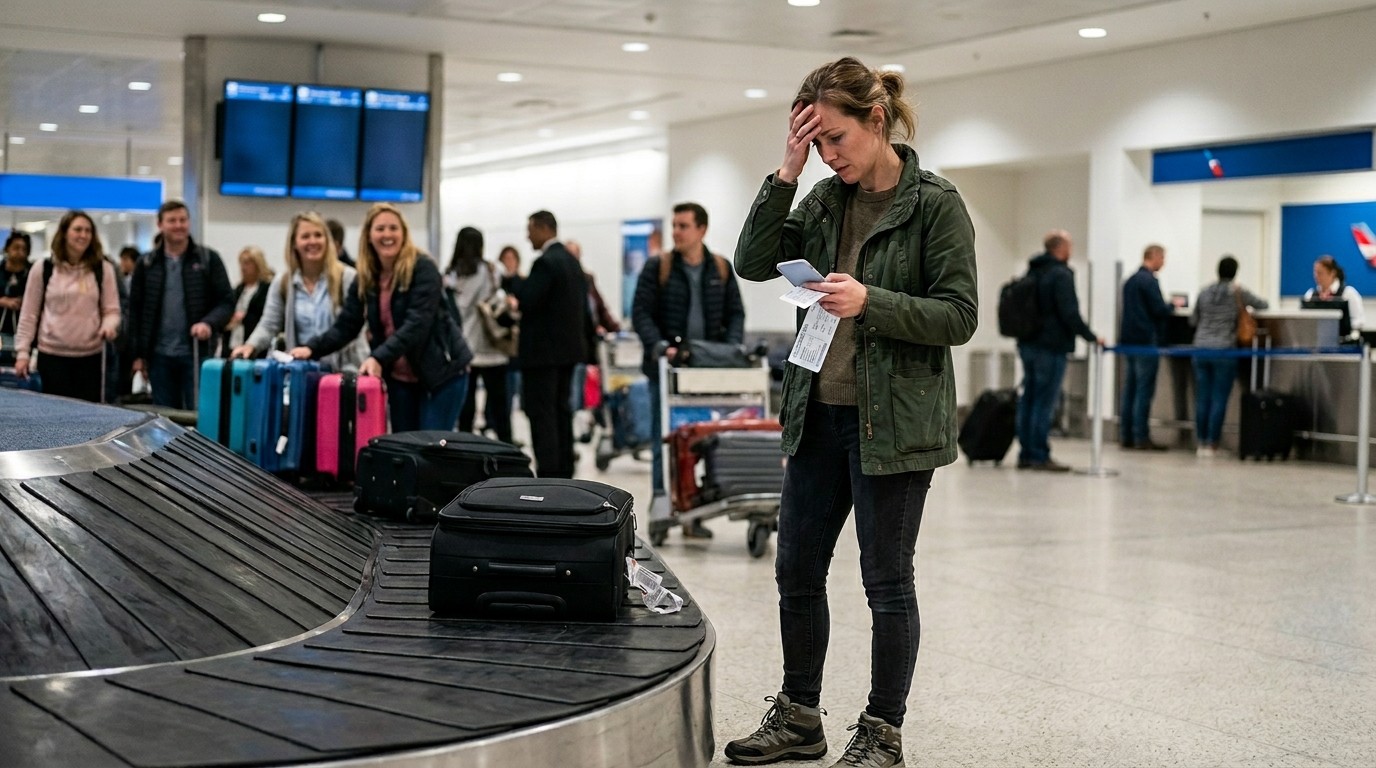
Do not walk away from the baggage area too quickly. Check the carousel carefully, confirm the flight number, and make sure the belt matches your arrival. Many travelers panic before the last bag has even come out. A disciplined Lost Luggage Guide always starts with verification.
If the bag is truly not there, go straight to the airline’s baggage desk or service counter. Give your flight number, bag description, and baggage tag number. Keep your explanation short and factual. A good Lost Luggage Guide values clarity because it helps staff start the search faster.
Ask for a written claim number before you leave the counter. This number is the key to follow-up, delivery updates, and any compensation request. Without it, the case can become much harder to track. A reliable Lost Luggage Guide always treats that reference number as urgent.
Take note of the names of the staff you speak with, the time you reported the issue, and the exact location of the desk. If the airport has several baggage counters, that detail may matter later. A careful Lost Luggage Guide turns a stressful moment into a documented timeline.
What to document immediately
Take a photo of the baggage tag if you still have it. If you can, take a photo of the suitcase before future trips as well. A strong Lost Luggage Guide relies on visual evidence because a clear image can help recovery teams match the missing item faster.
Write down what the suitcase looked like, including color, brand, size, damage marks, straps, stickers, or any unique features. Try to remember the most important contents too. You do not need a perfect inventory, but a useful Lost Luggage Guide always keeps major items and essentials in mind.
Save boarding passes, booking emails, bag receipts, and any text messages from the airline. If the airline asks for proof later, these documents can save time. A practical Lost Luggage Guide treats travel paperwork like a backup system, not a nice extra.
If you need a Travel Documents Organizer, this is exactly the kind of moment when it pays off. Keeping passports, itineraries, confirmations, and support documents together makes the claim easier and reduces stress when you need to speak to staff again.
What to ask the airline
Ask whether the bag has already been scanned somewhere else in the system. Sometimes staff can see that it was sent to another airport, delayed at a hub, or loaded onto a later flight. A good Lost Luggage Guide starts with visibility because the more the airline can see, the faster it can act.
Ask how the bag will be delivered if it is found. Will it be couriered to your hotel? Will you need to return to the airport? Will you get a text or email when it is located? A practical Lost Luggage Guide helps you plan the next day instead of waiting blindly.
Ask whether the airline covers essential purchases. Some carriers reimburse toiletries, clothing, or other necessities when a bag is delayed. The rules vary, so ask early. A careful Lost Luggage Guide knows that the first conversation can shape the whole claim.
Ask for everything important in writing if possible. That includes your claim number, the delivery promise, and any notes about expense reimbursement. A reliable Lost Luggage Guide depends on records, not memory alone.
How carry-on planning protects you
The easiest way to reduce the damage of missing luggage is to keep essentials with you. Medications, phone chargers, glasses, one outfit, and toiletries should stay in the cabin whenever possible. Carry On Luggage Rules matter here because the cabin bag is your safety net, not just a convenience.
A well-packed carry-on can keep a lost bag from ruining your first day. If you have a change of clothes, basic hygiene items, and your electronics, you can keep going while the airline works on the case. That is one of the strongest ideas in any Lost Luggage Guide.
Think of the carry-on as your trip insurance in physical form. It should hold the items that matter most if your checked bag is delayed for a day or more. A practical Lost Luggage Guide always protects the essentials first.
A small but complete carry-on also makes the airport experience easier in general. You move faster, unpack less, and stay more organized. That matters even more when a delay turns into a missing-bag problem.
What to buy if you need essentials
If your bag is delayed, buy only what you truly need. Start with toiletries, underwear, a simple outfit, and anything necessary for health or work. Keep every receipt. A disciplined Lost Luggage Guide says to spend for function, not frustration.
Check the airline policy before buying expensive replacements. Most airlines do not reimburse luxury items or unnecessary purchases. A calm Lost Luggage Guide helps you stay practical so the claim remains strong.
If you are staying with friends, family, or a helpful hotel, ask whether they have spare essentials you can borrow temporarily. A charger, soap, or extra shirt can reduce your immediate spending. A smart Lost Luggage Guide values simple short-term solutions.
Do not turn the delay into a shopping trip. The goal is to stay comfortable until the bag returns. A thoughtful Lost Luggage Guide keeps the trip moving without letting panic take over.
How to follow up without losing the case

After the report is filed, check the status regularly but not obsessively. Use the claim number, ask for updates, and note any delivery window you are given. A clear Lost Luggage Guide recommends steady follow-up because silence can slow the process.
Keep one central record of all calls, emails, and messages. Write down the time, the person you spoke with, and what was said. A good Lost Luggage Guide turns a messy problem into a clean timeline that can be reviewed later.
If the airline gives you an online tracking link or text updates, use them, but do not rely on them alone. Sometimes a bag moves before the system updates. A practical Lost Luggage Guide balances digital tracking with human follow-up.
When you talk to customer service, stay brief and factual. Repeat the claim number, describe the bag, and ask what happens next. A calm tone usually works better than anger. A mature Lost Luggage Guide understands that the people on the line are working inside a complicated system too.
What if valuable items were inside
If expensive items were checked, the situation deserves extra care. Electronics, jewelry, work gear, and sensitive documents are safer in the cabin whenever possible. A strong Lost Luggage Guide reminds travelers that expensive goods should not depend on chance.
If you have travel insurance, check the policy immediately. Some plans cover delay, loss, or theft, but the terms can be strict. Keep your receipts, photos, and claim number together. A serious Lost Luggage Guide starts gathering proof before the airline asks for it.
If the contents are important for work, health, or a special event, tell the airline clearly. Urgency can matter. A practical Lost Luggage Guide keeps the functional impact visible so the case is treated seriously.
Be accurate when you describe what was inside. Claims are strongest when they are believable and well documented. A solid Lost Luggage Guide protects your credibility because it helps the airline trust the file.
What if the bag comes back damaged
Sometimes the bag returns, but not in the condition you expected. A cracked shell, broken wheel, or torn zipper needs immediate photos and a written note. A useful Lost Luggage Guide treats damage as its own issue, not a minor afterthought.
Report the damage as soon as possible. If you wait too long, the claim may become harder. Keep the bag, receipts, and photos together in one place. A careful Lost Luggage Guide protects the evidence from the start.
If the bag can be repaired, ask for a written estimate. If replacement is more practical, keep proof of the original value. A disciplined Lost Luggage Guide helps you avoid losing value twice, first through damage and then through missing paperwork.
Even a damaged return can still be managed well if the records are clean. The key is to stay organized and report the problem quickly.
How to prevent future problems
Prevention begins with the bag itself. Use clear tags, visible identifiers, and an inside label with your contact details. Avoid tags that fall off easily. A smart Lost Luggage Guide says your suitcase should be easy to identify at a glance.
Choose a bag that is practical and easy to notice. Bright straps, a luggage cover, or a unique marker can help on crowded carousels. When your bag stands out, there is less chance of confusion. A long-term Lost Luggage Guide uses simple design choices to reduce stress later.
Before every trip, check the zippers, tag placement, and handles. Make sure the bag closes securely and that fragile items are protected. A practical Lost Luggage Guide is built on small habits that save time later.
The best prevention is still to keep your most important items with you. Travel documents, medications, electronics, and valuables belong in the cabin whenever possible. That single habit can keep a delayed suitcase from becoming a full crisis.
Why a good backup bag matters
A strong personal bag can make a big difference when checked luggage disappears. It should be comfortable, organized, and large enough for the items you truly need on arrival. Many travelers find that Best Travel Backpacks work well because they give easy access and keep important items separate.
The purpose of the backup bag is not to replace your suitcase. It is to make the delay manageable. If your main bag goes missing, your personal bag should still hold clothes, documents, chargers, and essentials. A thoughtful Lost Luggage Guide always includes that fallback.
Choose a bag with pockets or sections so you can find things quickly. Internal dividers and quick-access spaces are especially helpful during a stressful arrival. A strong Lost Luggage Guide values access more than appearance.
A good backpack also helps you stay mobile if you have to move from the airport to a hotel, bus station, or temporary stop. Comfort and flexibility matter when your trip has already been disrupted.
When to escalate
Most delayed bags are found through normal channels, but some cases need escalation. If the tracking goes quiet, the promised delivery keeps changing, or the airline stops responding, it may be time to ask for a supervisor. A sensible Lost Luggage Guide tells travelers not to wait forever.
Use facts, not emotion, when you escalate. Give the claim number, date of report, and all previous contact notes. The more organized the case is, the easier it is for a supervisor to step in. A practical Lost Luggage Guide turns persistence into structure.
If you are far from the original airport, ask whether the bag can be forwarded to your current location when found. That matters on multi-city trips. A good Lost Luggage Guide keeps delivery flexibility in mind.
If partner airlines or airport contractors are involved, things can move slowly. Keep every email and reference number together. A mature Lost Luggage Guide assumes the system may be messy and prepares for that reality.
How to protect your finances
A delayed bag can become expensive if you spend without a plan. Buy only what you need and keep every receipt. Many travelers lose money because they replace too much too quickly. A disciplined Lost Luggage Guide treats purchases as temporary solutions.
Check your credit card benefits and insurance coverage. Some cards offer baggage protection or trip interruption help, but the rules vary. A practical Lost Luggage Guide encourages travelers to know their benefits before they travel, not after.
If your policy has reporting deadlines, follow them closely. Missing a deadline can reduce your claim. A smart Lost Luggage Guide is not only about airline procedure, but also about your own timing.
Keep spending controlled by focusing on essentials first. The more reasonable your purchases are, the easier it is to get reimbursed later. A careful Lost Luggage Guide protects the budget while still keeping the trip moving.
Keeping the trip emotionally steady

A missing suitcase can make people feel powerless, but it does not mean the trip is ruined. The airline mishandled a bag; that does not mean you failed. A healthy Lost Luggage Guide reminds travelers that the issue is an inconvenience, not a personal mistake.
After you file the claim, take a short break. Drink water, sit down, and decide the next two actions. A calm reset helps you think more clearly. A steady Lost Luggage Guide is as much about emotional control as it is about paperwork.
If you are traveling with others, explain the situation once and then move on to the next step. Repeating the frustration over and over makes the stress worse. A useful Lost Luggage Guide keeps the focus on action.
Most bags are eventually found and delivered. That does not remove the frustration, but it keeps the situation in perspective. A good Lost Luggage Guide gives the traveler a process and a better chance of recovery.
A simple recovery checklist
Your checklist should be short and easy to remember. Confirm the bag is missing. File the report. Get the claim number. Document the suitcase and its contents. Ask about delivery. Keep receipts. Follow up. A compact Lost Luggage Guide works because it makes the next step obvious.
A written checklist also helps when stress makes memory unreliable. People forget details when they are tired or upset. A clear Lost Luggage Guide prevents that problem by turning the response into a repeatable routine.
After the bag returns, open it and check the contents carefully. Look for missing items, water damage, or broken pieces. If there is a problem, report it right away. A final step in any serious Lost Luggage Guide is verifying the recovery instead of assuming it is complete.
Conclusion
Missing luggage is frustrating, but it is rarely hopeless if you respond in the right order. Stay near the baggage area long enough to file a proper report, keep your documents organized, and use your carry-on wisely so the trip can continue. Follow up calmly, save receipts, and keep notes from the beginning. A good Lost Luggage Guide gives you a clear path through a stressful situation and reduces avoidable mistakes. When your records are clean and your actions are steady, the problem becomes manageable. The goal is not perfect control. The goal is smart action, better odds of recovery, and a quicker return to normal travel.
Frequently Asked Questions (FAQ)
1. What should I do first when my bag does not appear?
Stay near the baggage area, confirm the flight details, and report the issue to the airline’s baggage desk right away. If the desk is closed, find airport information and ask where to go next.
2. How important is the baggage claim number?
It is very important because it is the reference used for tracking, follow-up, delivery, and any compensation claim. Write the number down in more than one place so you do not lose it later.
3. Should I leave the airport before filing a report?
No. Filing the report immediately is usually the best way to start recovery and protect your claim. Waiting outside usually makes the next step slower.
4. What receipts should I keep?
Keep receipts for essential purchases, transport, communication costs, and any replacement items needed because the bag was delayed. Separate urgent essentials from optional items so the claim stays clear.
5. Will the airline reimburse everything I buy?
Not usually. Most airlines and insurers only cover reasonable essentials, not luxury or unnecessary items. A smart approach is to spend only what you need to keep the trip going comfortably.
6. How can I reduce the chance of lost luggage next time?
Use clear luggage tags, remove old tags, take a photo of your bag, and keep essentials in your carry-on. A clear bag tag and a quick photo from your phone make identification much easier.
7. Why are carry-on items so important?
They let you continue the trip comfortably if your checked bag is delayed or misplaced. Keeping basics with you turns a bad delay into a manageable inconvenience instead of a full disruption.
8. What if my bag is returned damaged?
Photograph the damage immediately, report it quickly, and keep all proof of value and repair estimates. If you notice damage later, report it as soon as possible and keep the bag together with the claim file.
9. How can a travel backpack help?
A well-organized personal bag keeps documents, chargers, clothing, and essentials with you during delays. It also helps you stay mobile if you need to move from the airport to a hotel or a temporary stop.
10. What is the biggest mistake travelers make after a bag goes missing?
They leave too quickly or fail to document the issue properly, which can make recovery and compensation harder. Careful notes and fast reporting usually make the difference between a smooth claim and a frustrating back-and-forth process.