
Flying safely starts well before you reach the airport. This plane travel security guide covers everything from TSA screening rules and carry-on baggage restrictions to in-flight safety habits and post-landing precautions—so you can focus on the journey, not the stress.
Few travel experiences test your patience quite like navigating airport security. The unpredictable lines, the rules that seem to change every time you fly, the last-minute laptop scramble—it’s enough to make even seasoned travelers anxious. But here’s the thing: most airport security headaches are entirely preventable with the right preparation.
This plane travel security guide is designed to walk you through every stage of your journey, from packing your carry-on to deplaning at your destination. Whether you’re a first-time flyer or a frequent traveler who’s picked up a few bad habits along the way, you’ll find practical, actionable advice here that makes a real difference.
Beyond the inconvenience factor, air travel security is a serious matter. The Transportation Security Administration (TSA) screens approximately 2.5 million passengers per day across U.S. airports, according to TSA data. With that volume, the margin for error—and the potential for delays, confiscated items, or missed flights—is significant. Understanding how the system works puts you in a far stronger position.
By the end of this post, you’ll know exactly what to pack, how to move through airport security screening efficiently, what your rights are as a passenger, and how to stay safe throughout your flight. Let’s get into it.
Why Plane Travel Security Matters More Than You Think
Most people treat airport security as a bureaucratic inconvenience—a hoop to jump through before the real trip begins. That mindset tends to lead to rushed decisions, forgotten liquids, and avoidable delays.
Plane travel security exists for a clear reason: to protect passengers, crew, and the public from threats that range from dangerous items in luggage to more serious risks. The protocols in place today are the result of decades of aviation safety refinements, shaped by real incidents and continuous intelligence-driven updates.
Understanding why these rules exist—not just what they are—makes it easier to comply with them confidently and help others around you do the same.
How to Prepare for Airport Security Before You Leave Home
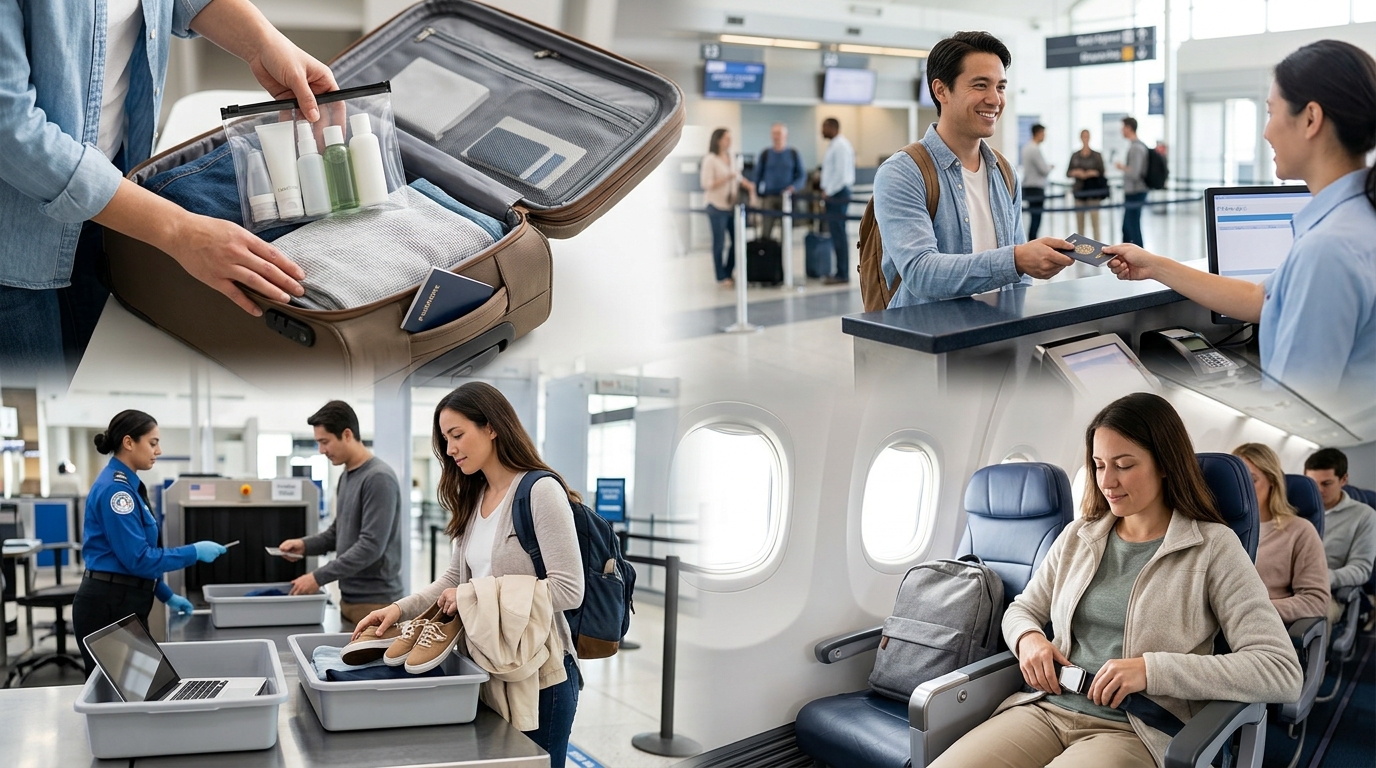
Preparation is the single most effective tool in any plane travel security guide. The vast majority of security delays and confiscations happen because passengers pack first and think later.
What to Pack and What to Leave Behind
Start with your prohibited items list. The TSA maintains a detailed “What Can I Bring?” database on its website that covers thousands of items. As a baseline:
- Prohibited in all luggage: Explosives, flammable materials, certain chemicals, and weapons without proper documentation.
- Prohibited in carry-on bags only: Items over the liquid limit, sharp objects longer than 4 inches, sporting goods like baseball bats, and firearms (unless properly declared and stored in checked baggage).
- Allowed with caveats: Lithium batteries, medications, and baby formula have specific rules that vary by quantity and type.
Carry-on baggage rules catch travelers off guard most often with liquids. The TSA’s 3-1-1 rule still applies: liquids, gels, and aerosols must be in containers of 3.4 ounces (100ml) or less, all fitting into one clear quart-sized bag, with one bag per passenger. Oversized toiletries are one of the most commonly confiscated item categories at checkpoints.
Organizing Your Bag for Faster Screening
Airport security screening is faster when your bag is logically packed. Agents look for anomalies on X-ray, and cluttered bags take longer to clear—or get pulled for manual inspection.
Practical packing tips:
- Keep electronics in an accessible outer pocket. Laptops and tablets must be removed and placed in a separate bin.
- Place your quart-sized liquids bag at the top of your carry-on for easy retrieval.
- Avoid packing dense or irregularly shaped items together—they create confusing X-ray images.
- Use packing cubes to keep clothing compressed and organized, leaving the main compartment cleaner.
|
Item Category |
Carry-On Allowed |
Checked Bag Allowed |
Notes |
|---|---|---|---|
|
Liquids (≤ 3.4 oz) |
✅ Yes |
✅ Yes |
Must be in 1 quart-sized bag |
|
Liquids (> 3.4 oz) |
❌ No |
✅ Yes |
Exceptions for medicine/baby formula |
|
Laptop/Tablet |
✅ Yes |
✅ Yes |
Must be removed at screening |
|
Lithium batteries |
✅ Yes (limited) |
⚠️ Restricted |
Spare batteries not allowed in checked bags |
|
Pocket knife (blade > 2.36″) |
❌ No |
✅ Yes |
Must be sheathed |
|
Firearms |
❌ No |
✅ Yes |
Must be declared, unloaded, in locked hard case |
|
Medications |
✅ Yes |
✅ Yes |
Carry documentation for liquid medications |
Navigating Airport Security Screening Step by Step
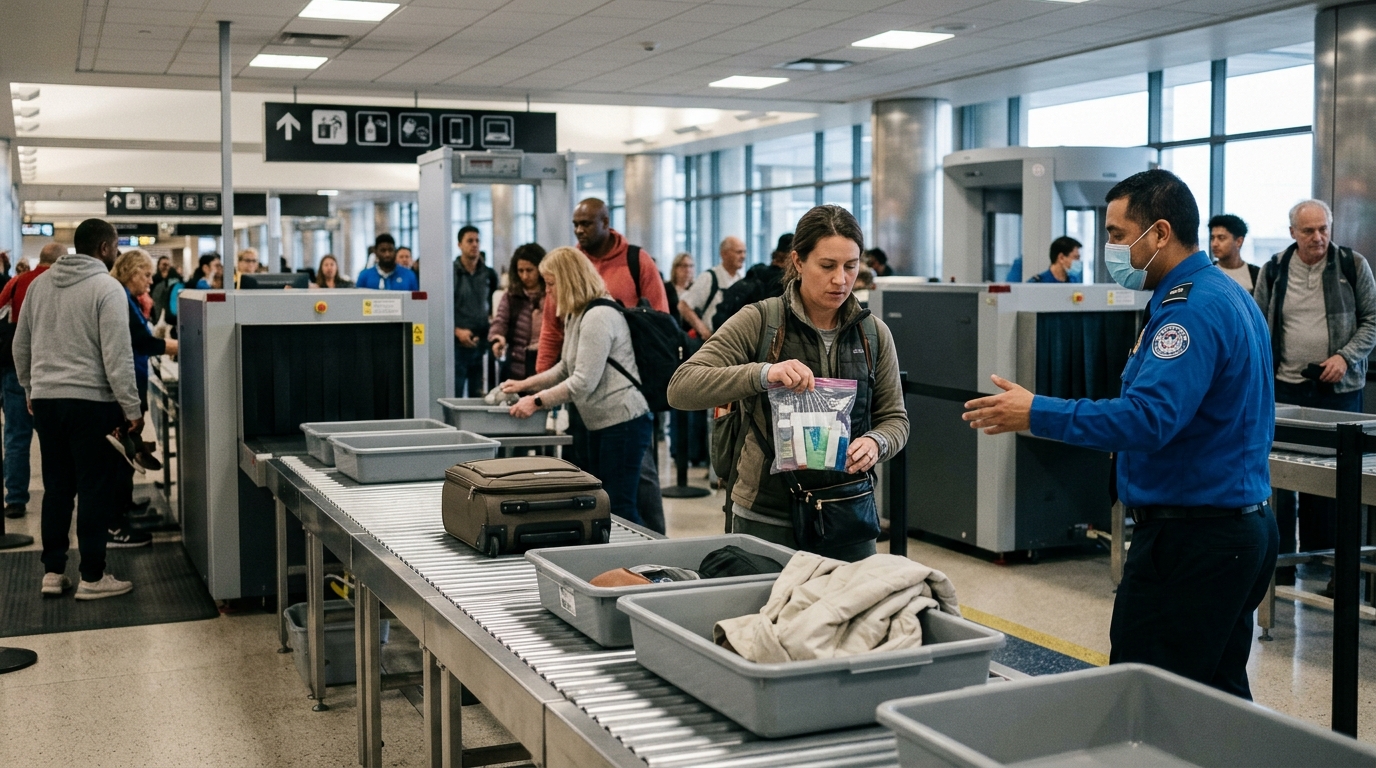
Even experienced travelers can slow down a checkpoint line by forgetting a routine step. This section breaks down the airport security screening process clearly so you know exactly what to expect.
Step 1 — Check In and Document Verification
Arrive at the airport with enough time to spare. For domestic flights, TSA recommends arriving at least 90 minutes before departure. For international flights, that window extends to two to three hours or more, depending on the airport.
At document check, a TSA officer will verify your boarding pass and government-issued ID. Starting May 7, 2025, REAL ID-compliant identification is required for domestic U.S. flights, per the Department of Homeland Security. If your state-issued ID is not REAL ID-compliant, bring a valid U.S. passport instead.
Step 2 — Preparing for the X-Ray
Before you reach the conveyor belt, start getting ready:
- Remove your laptop and any tablets from your bag and place them in a separate bin.
- Take off your shoes (required unless you’re enrolled in TSA PreCheck).
- Remove your belt, jacket, and any metal accessories.
- Pull out your quart-sized liquids bag from your carry-on.
- Empty your pockets completely—coins, keys, and phones all go in the bin.
This is where the plane travel security guide principle of preparation pays off most directly. Passengers who pre-organize their belongings move through in under a minute. Those who don’t can hold up an entire line.
Step 3 — Walking Through the Security Scanner
Standard checkpoints use Advanced Imaging Technology (AIT) or metal detectors. AIT scanners use millimeter wave technology—not X-rays—to detect anomalies beneath clothing. They do not produce detailed anatomical images; modern systems display a generic avatar with flagged areas highlighted.
If you are flagged for additional screening, remain calm. A TSA officer will conduct a targeted pat-down of the flagged area and may swab your hands for explosive trace detection. This process typically takes under five minutes.
Step 4 — Collecting Your Belongings
Once cleared, collect your bins promptly and step away from the conveyor belt before re-packing. Blocking the belt is one of the most common sources of post-screening congestion. Find a bench nearby to reassemble your bag, replace your shoes, and organize before heading to your gate.
TSA PreCheck, Global Entry, and Trusted Traveler Programs
If you fly more than a few times per year, enrolling in a trusted traveler program is one of the highest-return investments you can make for your time and comfort.
What Is TSA PreCheck?
TSA PreCheck is a U.S. government program that allows pre-approved, low-risk travelers to use dedicated expedited screening lanes. PreCheck members keep their shoes, belts, and light jackets on, and laptops and liquids can stay in the bag. According to TSA data, 93% of TSA PreCheck passengers wait less than five minutes at the checkpoint.
Enrollment costs $78 for five years and requires an in-person appointment at an enrollment center for identity verification and fingerprinting.
What Is Global Entry?
Global Entry, managed by U.S. Customs and Border Protection, provides expedited re-entry into the United States for international travelers. Global Entry membership ($100 for five years) automatically includes TSA PreCheck benefits. For frequent international flyers, Global Entry is the more cost-effective choice.
CLEAR: A Different Kind of Speed
CLEAR is a private biometric identity verification service available at more than 50 U.S. airports. Rather than replacing TSA screening, CLEAR lets members skip the ID check line using fingerprint or iris recognition, moving them directly to the security screening lanes. CLEAR members with TSA PreCheck can often clear security in under three minutes.
|
Program |
Cost |
Valid For |
Best For |
|---|---|---|---|
|
TSA PreCheck |
$78 |
5 years |
Domestic frequent flyers |
|
Global Entry |
$100 |
5 years |
International travelers |
|
CLEAR |
$189/year |
Annual |
High-frequency travelers at major airports |
Air Travel Security: What Happens on the Plane
Airport security screening gets most of the attention, but flight security tips extend into the cabin as well. Awareness and preparation during the flight itself contribute meaningfully to a safe journey.
Choosing Your Seat Strategically
Research published by aviation safety experts suggests that passengers seated within five rows of an emergency exit have statistically better outcomes in emergencies. Aisle seats also allow faster evacuation. These aren’t reasons to panic—commercial aviation remains the safest form of long-distance transportation—but small choices like seat selection reflect smart air travel security thinking.
Reviewing the Safety Briefing
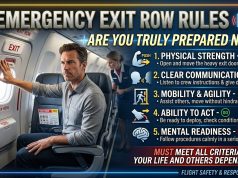
The safety briefing happens on every flight, and a surprising number of passengers tune it out entirely. Pay attention, even if you’ve flown the same route a hundred times. Locate the nearest exits (noting that the closest exit may be behind you), understand the brace position, and familiarize yourself with the life vest location on long-haul flights.
Keeping Your Valuables Secure In-Flight
Cabin theft, while rare, does occur. Flight security tips for protecting your belongings include:
- Keep your passport, wallet, and phone in a travel pouch worn under your clothing or a bag stored in the overhead bin directly above your seat.
- Never leave valuables in the seat pocket in front of you—these are accessible to anyone.
- If you need to sleep, use a travel lock to secure your bag’s zipper to the overhead bin handle.
Managing Health and Wellbeing at Altitude
Plane travel security also encompasses personal health. Cabin air pressure is typically equivalent to an altitude of 6,000 to 8,000 feet, which can cause mild dehydration and reduce blood oxygen saturation slightly. On flights longer than four hours, the risk of deep vein thrombosis (DVT) increases, particularly for passengers with underlying health conditions.
In-flight health habits worth adopting:
- Drink water consistently throughout the flight—aim for at least 8 ounces per hour.
- Stand, stretch, or walk the aisle every 60 to 90 minutes on long flights.
- Wear compression socks on flights over five hours if recommended by your doctor.
- Avoid excessive alcohol consumption; altitude amplifies its dehydrating effects.
International Travel: Security Rules That Differ From Domestic Flights
Traveling internationally adds layers of complexity to the plane travel security guide process. Rules around prohibited items, documentation, and customs vary significantly by country.
Know the Rules at Your Destination
Some items that are perfectly legal in the United States are prohibited in other countries. Certain medications, food items, and even some electronics are restricted or banned in specific nations. The U.S. Department of State’s country information pages and your destination country’s customs authority website are reliable reference points before departure.
Customs and Border Control at Arrival
On international flights, you’ll complete a customs declaration before landing. Answer every question accurately. Customs authorities in most countries take false declarations seriously, and penalties can include fines, confiscation of goods, or detention.
If you’re carrying items of declared value—jewelry, electronics, musical instruments—consider keeping receipts or appraisals accessible to demonstrate that items were purchased before your trip and are not subject to import duties.
Currency and Financial Security
Carrying large amounts of cash internationally introduces both security and regulatory risks. In the United States, travelers are required to declare currency or monetary instruments exceeding $10,000 when entering or leaving the country. Many other nations have similar thresholds.
Using credit cards or travel-specific debit cards with low foreign transaction fees reduces the amount of cash you need to carry while also providing theft protection.
Protecting Your Personal Data While Traveling
Modern travel security extends well beyond physical threats. Digital security is an increasingly relevant concern for air travelers, particularly those who rely on public Wi-Fi at airports.
Airport Wi-Fi Risks and How to Mitigate Them
Public Wi-Fi networks at airports are unsecured and vulnerable to interception. Avoid accessing sensitive accounts—banking, email, work systems—over airport Wi-Fi without a Virtual Private Network (VPN). A reputable VPN encrypts your internet traffic, making it significantly harder for third parties to intercept your data.
RFID Protection for Passports and Cards
Modern passports and many credit cards contain RFID chips that can be scanned wirelessly. RFID-blocking wallets and passport sleeves—widely available for under $20—prevent unauthorized scanning in crowded environments like airport terminals.
What to Do If Something Goes Wrong at the Airport
Even with the best preparation, situations arise. Knowing your rights and the correct steps to take keeps a bad situation from becoming worse.
If Your Bag Is Flagged or Confiscated
If a TSA officer flags your bag for inspection, you have the right to be present during any physical bag search. If an item is confiscated, ask for a Voluntary Abandoned Property form—this documents what was taken. Items of significant value that you believe were improperly confiscated can be reported through the TSA Contact Center.
If You Feel You’ve Been Treated Unfairly
Every TSA checkpoint has a Passenger Support Specialist available to assist travelers with disabilities, medical conditions, or concerns about the screening process. If you believe a screening was conducted improperly, request to speak with a supervisor on-site and follow up with a formal complaint through the TSA website.
Missed Flights Due to Security Delays
If a documented security delay causes you to miss your flight, contact your airline’s customer service desk immediately. Many carriers offer rebooking without fees in cases of verifiable security-related delays. Keep any documentation or screenshots that support your claim.
Your Plane Travel Security Checklist
Before you head to the airport, run through this checklist to make sure you’re fully prepared:
Before Packing:
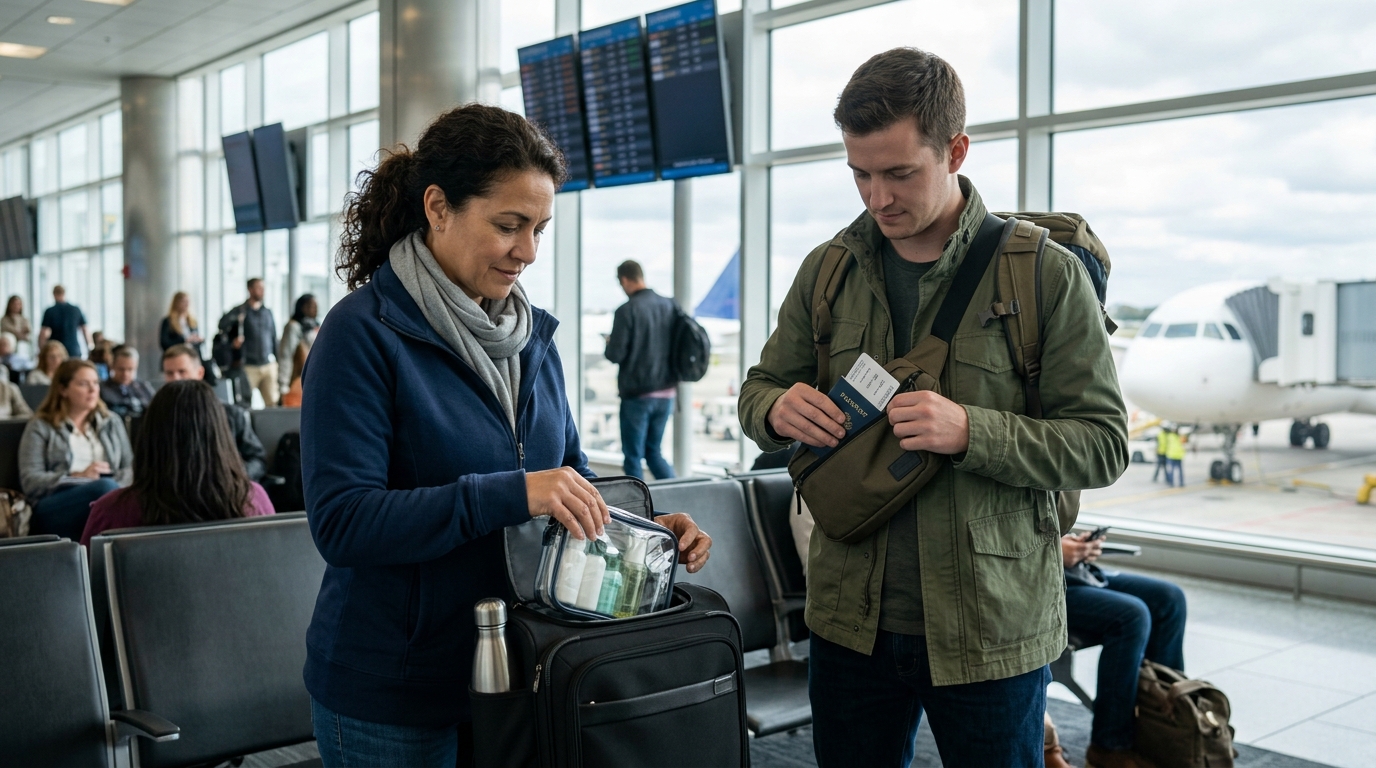
- ☐ Review the TSA prohibited items list for your specific items
- ☐ Confirm your ID is REAL ID-compliant (or bring a valid passport)
- ☐ Check destination-specific customs rules for international trips
- ☐ Install a VPN on your device for use at the airport
When Packing:
- ☐ Place all liquids in 3.4 oz or smaller containers in a clear quart-sized bag
- ☐ Pack your laptop in an easily accessible outer pocket
- ☐ Use packing cubes to organize your carry-on
- ☐ Store valuables in a theft-deterrent travel pouch
At the Airport:
- ☐ Arrive 90 minutes before domestic flights, 2-3 hours before international
- ☐ Prepare your bin before reaching the conveyor belt
- ☐ Remove shoes, belt, jacket, and all metal items
- ☐ Keep calm and cooperative if selected for additional screening
On the Plane:
- ☐ Review the safety briefing and locate the nearest exit
- ☐ Secure valuables in the overhead bin
- ☐ Drink water regularly and move around on long flights
The Bottom Line on Flying Safely and Confidently
Plane travel security is not a single checkpoint you pass through—it’s a mindset that runs from the moment you start packing to the moment you collect your checked luggage at your destination. The travelers who experience the smoothest journeys are those who understand the rules, prepare in advance, and approach each stage of the process with calm awareness rather than last-minute scrambling.
The tips in this guide aren’t about making travel feel clinical or overly cautious. They’re about removing friction so you can actually enjoy the experience. Commercial aviation is remarkably safe. With a little preparation and the right knowledge, your role as a passenger is simply to move through the system efficiently—and then make the most of wherever you’re headed.
If you found this plane travel security guide helpful, bookmark it before your next trip and share it with anyone you know who finds airport security stressful. The more prepared every traveler is, the smoother the experience is for everyone.
Frequently Asked Questions
What is the 3-1-1 rule for carry-on liquids?
The TSA’s 3-1-1 rule requires that all liquids, gels, and aerosols in carry-on bags be in containers of 3.4 ounces (100ml) or less, packed into one clear quart-sized zip-top bag, with one bag allowed per passenger. Containers larger than 3.4 ounces are not permitted in carry-on luggage, even if the container is not completely full.
What ID do I need to fly domestically in the United States?
Starting May 7, 2025, the TSA requires a REAL ID-compliant driver’s license, state ID, or another acceptable form of identification such as a valid U.S. passport for domestic air travel. Check your card for a star marking in the upper corner to confirm it is REAL ID-compliant.
Can I bring my medication through airport security screening?
Yes. The TSA allows medications in both carry-on and checked baggage. Liquid medications in quantities greater than 3.4 ounces are permitted in carry-on bags but must be declared at the checkpoint and removed from your bag for separate screening. Keeping a copy of your prescription or a doctor’s note is recommended, particularly for controlled substances.
Is TSA PreCheck worth it for occasional travelers?
TSA PreCheck is generally worth it for travelers who fly two or more times per year. The five-year membership ($78) works out to less than $16 per year. The time savings—and the reduction in stress from expedited airport security screening—are significant. If you travel internationally as well, Global Entry ($100 for five years) offers PreCheck benefits plus expedited U.S. Customs processing, making it the better value.
What should I do if I miss my flight because of a long security line?
Go directly to your airline’s customer service desk or use the airline’s app to rebook as quickly as possible. Explain that you were delayed by security. Many airlines will waive rebooking fees in documented cases of security-related delays. If possible, screenshot the security wait time or obtain written confirmation from a TSA officer.
Can I carry cash through airport security?
There is no limit on how much cash you can carry through domestic airport security screening in the United States. However, if you are traveling internationally and carrying more than $10,000 in currency or monetary instruments, you are legally required to declare it to U.S. Customs. Failure to declare can result in confiscation and penalties.
Are airport body scanners safe to use?
Yes. TSA Advanced Imaging Technology (AIT) scanners use millimeter wave energy, not ionizing radiation like X-rays. According to the TSA, the energy emitted by AIT scanners is thousands of times less than a cell phone transmission. Passengers who prefer not to use the AIT scanner may request a pat-down alternative.